

Why Colorado’s Booming Real Estate Market Makes Legal Protection Essential
A Colorado real estate lawyer provides essential legal protection for property transactions, handling contract review, title issues, dispute resolution, and regulatory compliance. Here’s what you need to know:
- When to hire: Before making offers, during due diligence, or when facing disputes
- What they do: Review contracts, resolve title problems, handle closings, manage litigation
- Average cost: $275-$400 per hour or flat fees of 1-3% of transaction value
- Key benefits: Risk mitigation, DORA compliance, dispute prevention, closing coordination
Colorado’s real estate market is among the fastest-growing in the nation, with over 120,000 residential transactions in 2023 alone. But as one experienced buyer found after relying on falsified septic test documents, “real estate is often the single greatest asset, investment, and liability that a person or business can make.”
The stakes are high. With approximately 1 in 5 Colorado real estate transactions encountering legal disputes, having proper legal guidance isn’t just smart—it’s essential protection for your largest investment.
Colorado doesn’t require a real estate lawyer for home purchases, but the state’s complex regulations under Title 38 statutes, DORA oversight, and unique considerations like water rights make legal expertise invaluable. From HOA disputes governed by the Colorado Common Interest Ownership Act (CCIOA) to boundary issues and construction defects, the potential legal pitfalls are numerous.
I’m Tommy Lorden, Managing Broker and founder of Slice Realty, with a legal background from Chicago-Kent College of Law. My experience has shown me how a Colorado real estate lawyer can save clients thousands while protecting their interests in complex transactions.
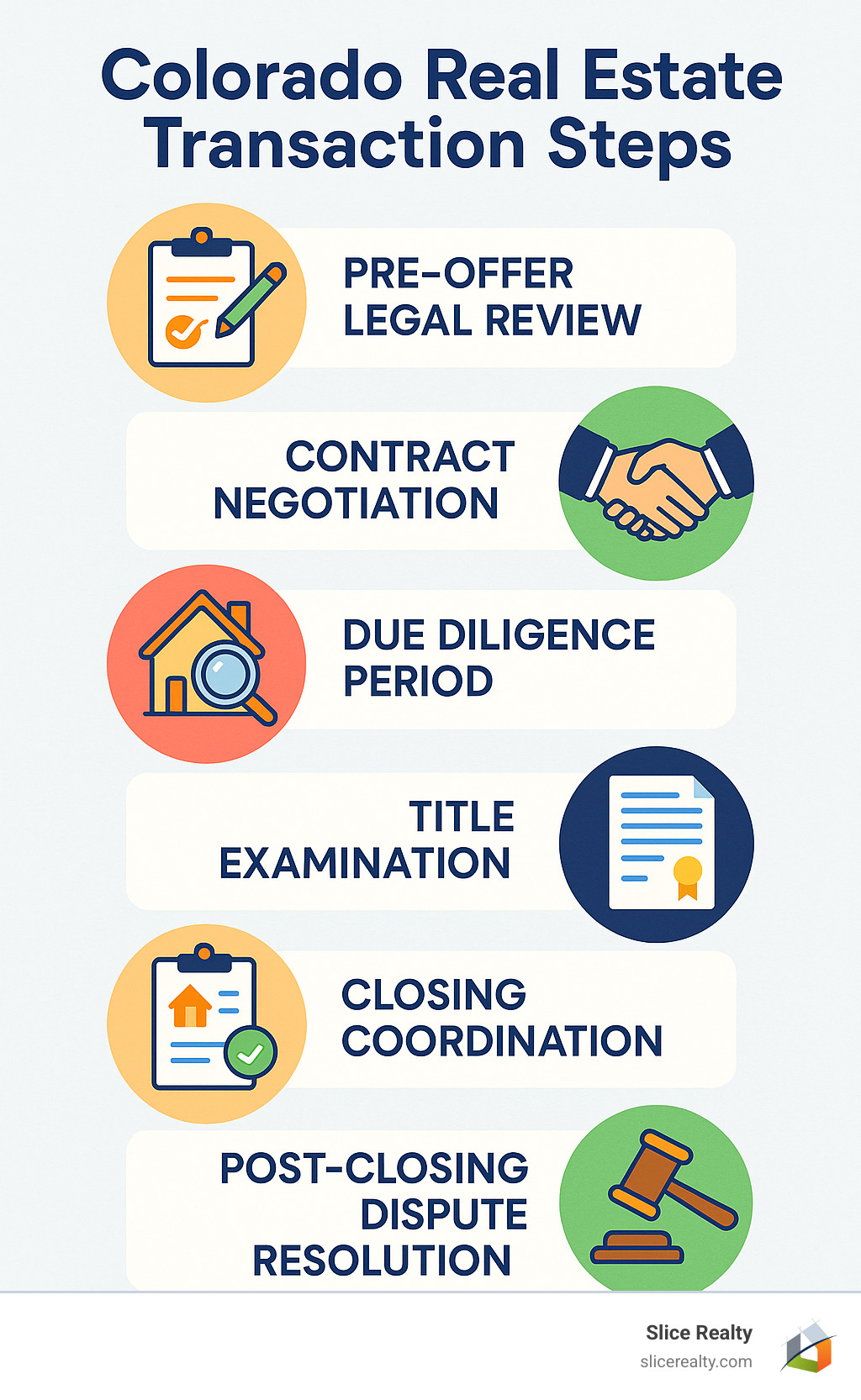
Why You Need a Colorado Real Estate Lawyer

Colorado real estate is complicated. While the Colorado Division of Real Estate oversees over 46,000 licensed agents and brokers, that oversight doesn’t protect you from legal headaches.
Your real estate agent can help you find the perfect home and negotiate a great price, but they can’t give legal advice or draft specialized agreements that might save your deal. That’s where a Colorado real estate lawyer becomes essential.
Colorado Revised Statutes Title 38 covers everything from basic property ownership to complex landlord-tenant rules. Add in DORA regulations, local zoning laws, and federal requirements, and you’ve got a legal maze that even experienced buyers can get lost in.
What Does a Colorado Real Estate Lawyer Do?
A Colorado real estate attorney handles everything from simple home purchases to complex commercial deals.
Transaction oversight is their bread and butter. They review your purchase agreement line by line, conduct thorough title searches, coordinate with lenders and inspectors, and ensure you’re meeting all of Colorado’s disclosure requirements.
Dispute prevention is where they really shine. A good lawyer spots problems before they become disasters. They draft protective contract language, advise you on smart contingencies and critical deadlines, and handle delicate pre-closing negotiations.
Contract drafting creates documents that actually protect you. Whether you need seller financing agreements, lease-option arrangements, or help structuring a 1031 exchange, they know how to get it done right.
Escrow coordination oversees the entire closing process, resolves title defects, handles fund disbursements, and ensures all documents get properly recorded.
When Should You Hire?
Timing is everything when bringing a Colorado real estate lawyer onto your team.
Before you make an offer, consider hiring a lawyer if you’re buying your first home in Colorado, dealing with known title issues, looking at foreclosure properties, or buying investment properties.
During due diligence, legal help becomes essential when surveys reveal boundary disputes, inspections uncover major problems, HOA documents contain concerning restrictions, or zoning issues might affect your property use.
Boundary and title issues are particularly tricky in Colorado. Easement disputes, mineral rights questions, water rights complications, and adverse possession claims all need expert legal attention.
If you’re facing foreclosure, don’t go it alone. A lawyer can challenge improper procedures, negotiate modifications, explore alternatives, and protect your homestead exemptions.
How a Colorado Real Estate Lawyer Protects Your Transaction
Real estate deals have more moving parts than a Swiss watch, and Colorado’s unique legal landscape makes things even more complex.
Title insurance coordination goes beyond what title companies typically provide. While title companies handle basic searches, lawyers dig deeper into potential issues like unrecorded easements or brewing boundary disputes.
Inspection dispute resolution becomes crucial when problems surface. Your lawyer knows how to negotiate repairs, credits, or contract modifications that stick. They understand Colorado’s property condition disclosure requirements and can shield you from post-closing liability.
Financing contingency management is especially important in Colorado’s competitive market. Your attorney ensures loan conditions are properly documented and protects your earnest money if financing falls through.
As one relieved client recently told us, “The lawyer’s review caught a $50,000 title issue that would have been my nightmare after closing.”
More info about Lawyer-Led Real Estate Services
Key Areas of Colorado Real Estate Law & Common Disputes

Colorado’s real estate landscape is as complex as its mountain terrain. Every year, thousands of property owners find themselves tangled in disputes that could have been avoided with proper legal guidance.
Boundary disputes top the list of headaches for Colorado property owners. Our state’s rugged geography and patchwork of historical surveys create perfect conditions for confusion. One client found their “new” fence was actually three feet onto their neighbor’s land—a $15,000 mistake that proper surveying and legal review could have prevented.
HOA conflicts run a close second. The Colorado Common Interest Ownership Act (CCIOA) governs these communities, but that doesn’t stop arguments over everything from paint colors to pet policies. When your HOA decides to assess $5,000 per unit for new roofing without proper notice, you’ll want a Colorado real estate lawyer who knows CCIOA inside and out.
Water rights might sound boring until you realize they can make or break your property’s value. Colorado follows the “first in time, first in right” rule, which means the person who used the water first gets priority. These rights often transfer separately from the land itself—a complexity that catches many buyers off guard. For a quick primer, see Colorado water law on Wikipedia.
Easements create another common source of confusion. That scenic mountain trail crossing your property might be a public easement you can’t block. Or maybe your neighbor has been using your driveway for twenty years and now claims a legal right to continue.
Adverse possession cases happen more often than you’d think. Colorado law allows someone to potentially gain ownership of your land if they use it openly for a specific period.
Residential & Commercial Closings Made Simple
Every Colorado closing follows the same basic legal framework, but the devil lives in the details. Purchase agreements form the foundation of your transaction, and while Colorado Real Estate Commission forms work for straightforward deals, unique situations often need custom language.
Disclosure requirements under Colorado law protect buyers, but they also create liability for sellers. Missing disclosures about basement flooding or HOA lawsuits can come back to haunt you long after closing.
Escrow coordination might seem automatic, but someone needs to ensure all the moving pieces align correctly. Title companies handle the mechanics, but lawyers provide oversight that catches problems before they derail your deal.
Commercial transactions multiply these complexities exponentially. Environmental assessments, zoning compliance, and sophisticated financing structures require legal expertise that goes far beyond residential knowledge.
More info about Flat Fee Real Estate Colorado
Landlord-Tenant & Evictions
Colorado’s rental market has experienced dramatic legal changes in recent years. What worked for landlords five years ago might now violate state law and cost you thousands in penalties.
Security deposits seem straightforward until you realize Colorado Revised Statutes 38-12-103 creates strict timelines and procedures. Miss the deadline for returning deposits, and you could face treble damages—meaning that $2,000 deposit becomes a $6,000 judgment against you.
Warranty of habitability requirements have strengthened significantly. Landlords now face higher standards for maintaining rental properties, and tenants have more tools to enforce these rights.
“For cause” evictions represent perhaps the biggest change in Colorado rental law. The days of non-renewing leases without reason are largely over. Now you need legitimate cause and proper procedures, or you risk expensive legal challenges.
HOA and CCIOA Hotspots
Living in an HOA community means navigating the Colorado Common Interest Ownership Act, and it’s more complicated than your HOA board might realize.
Rule enforcement must follow due process requirements. Your HOA can’t just decide you owe fines without proper notice and hearing procedures. We’ve seen boards create expensive liability by skipping these steps.
Assessment disputes often arise when HOAs need major repairs or improvements. Special assessments require specific notice procedures, and in some cases, homeowner approval. Getting this wrong can invalidate the entire assessment.
Mediation requirements under CCIOA actually help resolve disputes faster and cheaper than going straight to court.
Development, Zoning & Water Rights
Colorado’s continued growth creates ongoing challenges for developers and property owners alike. Land use permits vary dramatically between jurisdictions—what works in Denver might not fly in Boulder County.
2024 legislative updates have changed several aspects of Colorado property law, particularly around HOA governance and construction defect claims. These changes affect both new developments and existing communities.
Water rights documentation remains crucial for any significant development. Colorado’s water law is unique, and proper filing with state authorities protects your investment.
Scientific research on Colorado property law
Litigation vs. Alternatives: Keeping Deals on Track

When real estate deals hit roadblocks, you don’t always need to head straight to court. In fact, most disputes can be resolved faster and cheaper through other methods. The key is knowing which path makes sense for your situation.
Breach of contract cases are among the most common real estate disputes in Colorado. When a seller backs out at the last minute or a buyer disappears after inspection, emotions run high. But before filing a lawsuit, consider whether negotiation or mediation might get you to the same result without the stress and expense of court.
Real estate fraud cases are different. When someone deliberately lies about property conditions or forges documents, litigation might be your only option to recover damages and hold wrongdoers accountable. These cases often require the formal findy process that only courts can provide.
Partition actions come up when co-owners can’t agree on what to do with shared property. Maybe one sibling wants to sell the family home while another wants to keep it. Colorado courts can order the property sold and proceeds divided, even when no one has done anything wrong.
Here’s how the three main options compare:
| Resolution Method | Time Required | Cost Range | Binding Result | Privacy |
|---|---|---|---|---|
| Litigation | 12-36 months | $50,000-$200,000+ | Yes | Public record |
| Mediation | 1-6 months | $5,000-$25,000 | No | Private |
| Arbitration | 6-18 months | $15,000-$75,000 | Yes | Private |
The numbers tell the story. Mediation typically costs 60-80% less than litigation, while arbitration runs about 40-60% less than going to court. Plus, you keep your business private instead of having it become public record.
When Litigation Is Inevitable
Sometimes you have no choice but to go to court. A Colorado real estate lawyer can help you recognize when litigation is your best or only option.
Quiet title actions are necessary when property ownership is genuinely unclear. Maybe there’s a gap in the chain of title, or someone claims ownership based on an old deed. These issues can’t be resolved through negotiation because they require a judge’s official determination of who owns what.
Specific performance cases happen when money damages aren’t enough. In Colorado’s competitive market, if you found the perfect property and the seller tries to back out for a better offer, you might want the court to force the sale rather than just getting your earnest money back.
Injunctive relief becomes necessary when someone is actively interfering with your property rights. If a neighbor builds on your land or violates restrictive covenants, you need a court order to stop the harmful behavior while you work out the underlying dispute.
Trial preparation for complex real estate cases requires extensive work. Expert witnesses, property appraisals, document review, and legal research all take time and money. But when the stakes are high enough, it’s worth the investment.
Using ADR to Save Time & Money
Alternative dispute resolution (ADR) offers practical solutions that often work better than traditional litigation for real estate disputes.
Binding arbitration gives you many benefits of a trial without the public nature and extended timeline of court proceedings. You and the other party agree to accept an arbitrator’s decision as final. The process is more formal than mediation but still faster and more private than litigation.
Non-binding mediation puts a neutral third party in the room to help everyone find common ground. Even when mediation doesn’t solve everything, it often narrows the issues and helps parties understand each other’s positions. This makes any later litigation more focused and less expensive.
Cost savings from ADR can be dramatic. We’ve seen mediation resolve disputes that could have cost six figures in litigation fees. The money you save can often be put toward actually solving the underlying problem rather than just fighting about it.
Settlement strategies require experience to execute well. A skilled lawyer knows when to push hard and when to compromise. They can evaluate your case’s strengths and weaknesses early on, helping you make informed decisions about whether to settle or fight.
The bottom line? Most real estate disputes don’t need to become courtroom battles. But when they do, you want experienced legal representation that understands Colorado real estate law inside and out.
More info about Self-Directed Real Estate Transactions
Costs, Flat Fees & Choosing Your Colorado Real Estate Lawyer

Nobody likes surprises when it comes to legal bills. Understanding what you’ll pay for legal help makes the entire process less stressful and helps you budget properly for your real estate transaction.
Hourly rates for Colorado real estate attorneys typically range from $275 to $400 per hour as of 2025. If you’re working with lawyers in Denver or Boulder, expect rates toward the higher end of this range.
Flat-fee arrangements are becoming more popular because they eliminate billing surprises. For routine residential purchase or sale reviews, you’ll typically pay between $1,500 and $3,500. Commercial transactions cost more—usually $5,000 to $15,000—because they involve more complexity.
Retainer fees come into play when litigation is possible or ongoing. Pre-litigation matters usually require $5,000 retainers, while active litigation demands $10,000 to $25,000 up front.
Most attorneys charge $350 to $700 for initial consultations, though some offer free consultations for potential clients.
Finding the Right Colorado Real Estate Lawyer for You
Choosing a Colorado real estate lawyer isn’t like picking a restaurant from online reviews. Your attorney needs specific knowledge of Colorado law, local practices, and your particular type of transaction.
Experience matters immensely. National real estate experience doesn’t automatically translate to understanding Colorado’s unique water rights laws, HOA regulations, or local court procedures. Ask potential attorneys how many Colorado real estate transactions they’ve handled and what percentage of their practice focuses on real estate law.
Specialization within real estate law can be crucial. An attorney who handles mostly residential transactions might not be the best choice for a complex commercial development deal.
Local knowledge saves time and money. Colorado’s 64 counties each have their own quirks, local rules, and established practices.
When interviewing potential attorneys, ask direct questions: How many Colorado real estate transactions have you handled? Can you provide references from recent clients? How do you structure fees for my type of matter?
Always verify licensing through the Colorado Supreme Court’s attorney database and check for any disciplinary actions.
More info about Affordable Real Estate Lawyer
Slice Realty’s Lawyer-Led Flat-Fee Advantage
At Slice Realty, we’ve spent over 15 years figuring out how to combine legal expertise with transparent pricing that actually makes sense for real estate clients across Colorado‘s Front Range.
Our legal background means we understand both the business and legal sides of property transactions. We’ve seen how small legal issues can become expensive problems, and we know how to prevent most of them before they start.
Transparent flat-fee pricing of 1-3% gives you cost certainty from day one. No surprise bills, no hourly rate anxiety, no wondering whether that five-minute phone call will cost you $50.
Front Range coverage means consistent service whether you’re buying in Boulder, Superior, Denver, Colorado Springs, Fort Collins, Erie, or Aurora. We understand the local markets and legal requirements in each area.
Cost-saving focus drives everything we do. Our lawyer-led approach catches potential problems early, when they’re still easy and inexpensive to fix. We work with experienced buyers and sellers who understand real estate basics but want legal protection without the traditional legal fees.
Frequently Asked Questions about Hiring a Colorado Real Estate Lawyer
Let’s address the three questions we hear most often from Colorado property buyers and sellers. These answers should help you decide whether legal representation makes sense for your situation.
Do I need a lawyer to buy a home in Colorado?
Here’s the honest answer: Colorado doesn’t legally require you to hire a Colorado real estate lawyer for home purchases. But after handling thousands of transactions since 2009, I can tell you that legal protection often pays for itself.
The numbers tell the story. With roughly 1 in 5 Colorado transactions running into legal issues, the real question becomes whether you can afford not to have professional legal guidance. It’s like asking whether you need insurance—you hope you’ll never use it, but you’ll be grateful it’s there when problems arise.
First-time buyers especially benefit from legal guidance. Colorado’s unique laws around water rights, HOA regulations, and disclosure requirements can trip up even experienced buyers from other states. Foreclosure and short sale properties present additional risks that require careful legal review.
If you’re buying investment properties, legal representation becomes even more valuable. You’ll likely need entity formation advice, tax strategy guidance, and asset protection planning. Complex financing arrangements like seller financing or lease-options definitely warrant legal review.
Even experienced buyers find value in having contracts and closing documents reviewed by someone who understands Colorado law inside and out. As one client recently told us, “The attorney’s review caught a title issue that would have cost me $30,000 after closing.”
What are typical attorney fees at closing?
Attorney fees vary quite a bit depending on what services you need and how your lawyer structures their billing.
For basic transaction review—contract analysis, title examination, and closing attendance—expect to pay $1,500 to $2,500. This covers the essentials without full transaction management.
Full representation including contract negotiation, due diligence oversight, and problem resolution typically runs $2,500 to $5,000. This comprehensive service can save you significant money and stress throughout the transaction.
Here at Slice Realty, we’ve taken a different approach with flat-fee structures ranging from 1-3% of the transaction value. This gives you cost certainty upfront and often saves thousands compared to traditional hourly billing. No surprise bills, no meter running during phone calls.
If you encounter an attorney who bills hourly, budget for 8-15 hours of legal work on a typical residential transaction. At current Colorado rates of $275-$400 per hour, this adds up quickly.
Attorney fees are often negotiable, especially for straightforward transactions. The investment in legal protection usually pays for itself by preventing much larger problems down the road.
Can my lawyer handle 1031 exchanges and investment entities?
Absolutely, but make sure you choose a Colorado real estate lawyer with specific experience in investment transactions. These deals involve both real estate and business law, so general practice attorneys might not have the depth you need.
1031 exchanges require precise timing and documentation to qualify for tax deferral. Your attorney will coordinate with qualified intermediaries, ensure proper identification of replacement properties, and handle the complex paperwork. Miss a deadline or file incorrect documents, and you could face significant tax consequences.
Entity formation is another area where legal expertise proves valuable. Many investors use LLCs or partnerships to hold real estate for liability protection and tax advantages. We can form these entities and draft operating agreements that actually protect your interests—not just generic templates.
Asset protection strategies become crucial as your portfolio grows. Proper legal structures can shield your real estate investments from personal liability while providing ongoing tax benefits. This isn’t just about formation—it’s about creating systems that work long-term.
Don’t forget about ongoing compliance requirements. Investment entities need annual filings, documentation updates, and periodic legal maintenance to remain effective. Choose an attorney who understands the long-term relationship, not just the initial transaction.
The key is finding someone who regularly works with real estate investors and understands both the legal requirements and practical business considerations. Ask potential attorneys about their specific experience with investment properties and entity structures before making your decision.
Conclusion
Colorado’s red-hot real estate market creates incredible opportunities, but it also comes with serious legal risks that can cost you dearly. Having a Colorado real estate lawyer on your side isn’t just smart—it’s essential protection for what’s likely your biggest financial decision.
You wouldn’t perform surgery on yourself, so why steer complex property law without professional help? The legal landscape in Colorado is constantly changing, from new HOA regulations to updated disclosure requirements. What you don’t know really can hurt you.
Your investment deserves protection. Whether you’re a first-time buyer nervous about the process, a seasoned investor building your portfolio, or someone caught in a property dispute, legal expertise pays for itself. We’ve seen too many clients who tried to save money by skipping legal review, only to face much bigger bills later.
The math is simple: proper legal representation typically costs far less than fixing problems after they happen. A $2,500 attorney fee looks pretty reasonable when it prevents a $50,000 title dispute or saves your earnest money when a deal goes sideways.
Ready to take the next step? Start by honestly evaluating your situation. Complex transactions, investment properties, or anything that feels “different” from a standard deal deserves legal attention. Research attorneys with real Colorado experience—not just general practice lawyers who occasionally handle real estate.
Schedule consultations with a few candidates. Ask tough questions about their experience and fee structure. Most importantly, get any contracts or documents reviewed before you sign them. Once your signature is on that paper, your options become much more limited.
At Slice Realty, we’ve been protecting Colorado real estate transactions since 2009. Our lawyer-led approach combines the legal expertise you need with flat-fee transparency that eliminates billing surprises. We serve the entire Front Range with the same commitment to saving you money while keeping you legally protected.
Don’t gamble with your real estate investment. The Colorado market moves fast, but rushing without proper legal protection can turn your dream home into a legal nightmare.
More info about Colorado Property Attorney
Ready to protect your Colorado real estate transaction with lawyer-led expertise? Contact us today to find how our flat-fee approach saves you money while providing the legal protection you need for a smooth, successful closing.
